The quick version
- A tandem pilot flies the wing and makes every decision in the air; your job is to sit in the harness and take in the view.
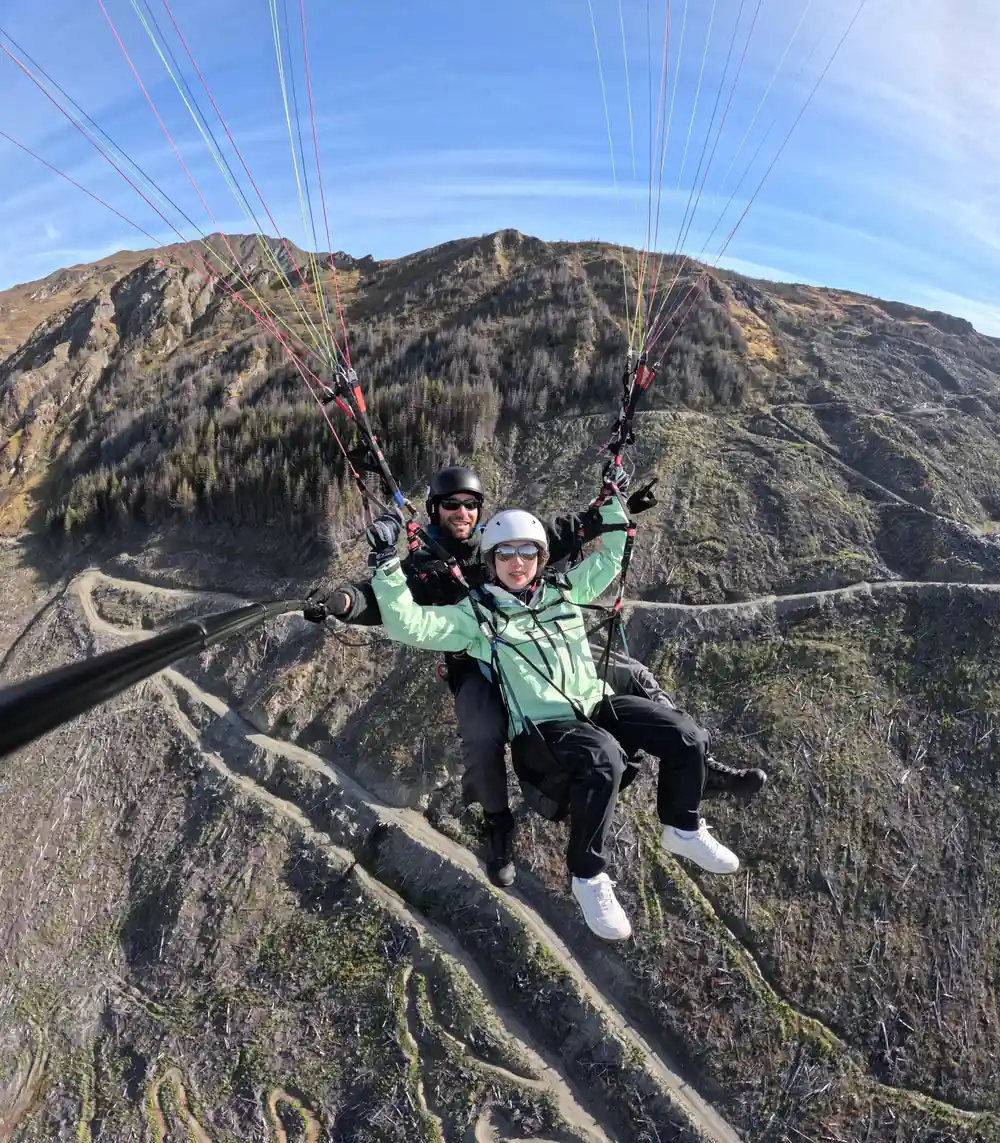
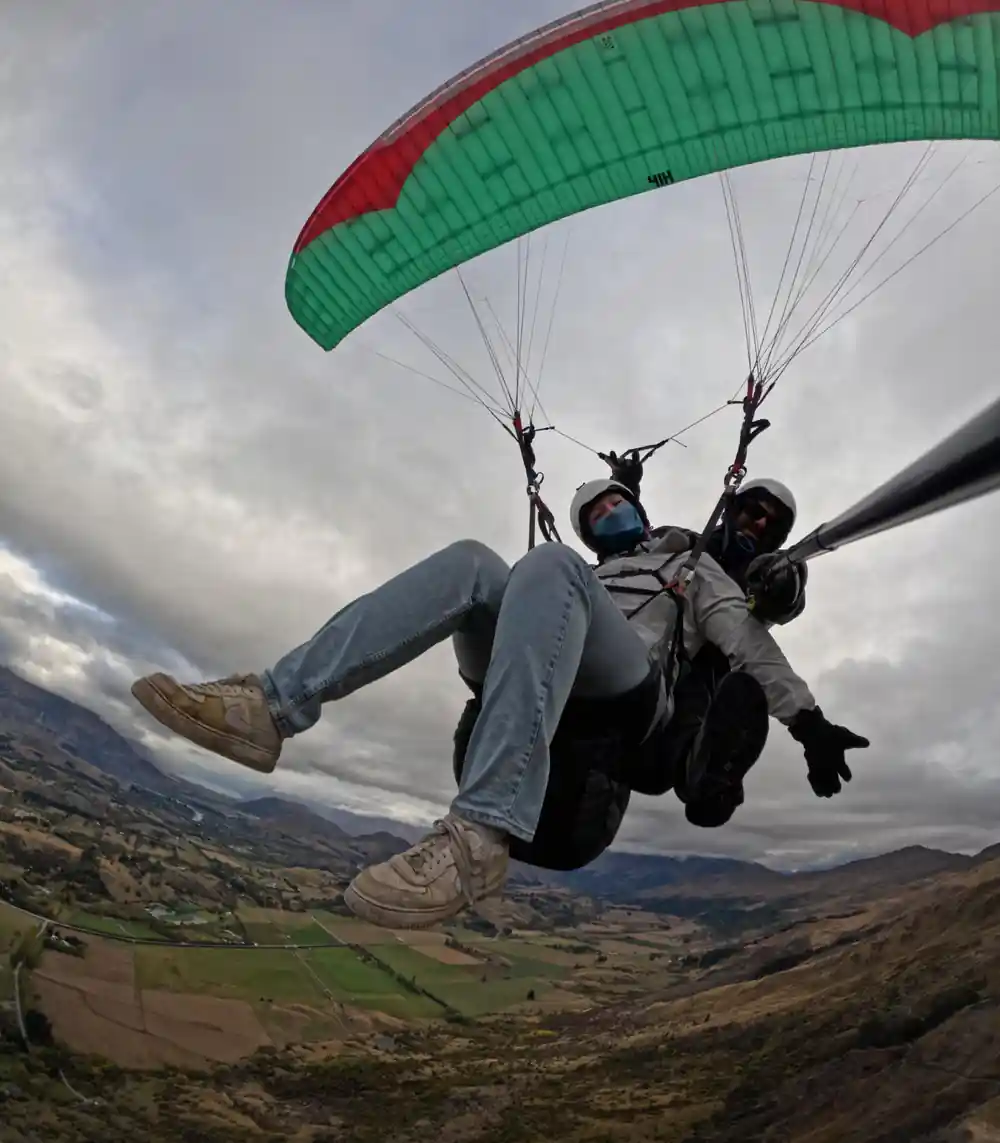
- You are clipped into a harness fixed to the same wing as the pilot, seated in front of them for the whole flight.
- Before anyone leaves the ground at Coronet Peak, the booking includes a twenty minute safety briefing.
- The flight only goes ahead when conditions allow it, and free cancellation is offered if the day does not work out.
A Wing, Not a Parachute
The word paragliding puts a picture in some people's heads that is closer to a parachute than to what actually happens at Coronet Peak. A parachute is built to slow a fall: it opens, and from that point the job is done. A paraglider is a wing. Shaped like an aircraft wing rather than a dome, it is inflated by the air moving across it and it generates lift as it moves forward, the same basic idea that keeps a plane up rather than the idea that keeps a falling object from hitting the ground too hard.
That difference matters because it changes what the flight actually is. A wing that is flying can be steered, turned, and slowed, and height can be given up gradually and on purpose rather than lost all at once. Nothing about a tandem paragliding flight involves falling through open air before anything opens. The wing is already open, already flying, and already doing its job before your feet leave Coronet Peak.
Who Is Actually Flying You
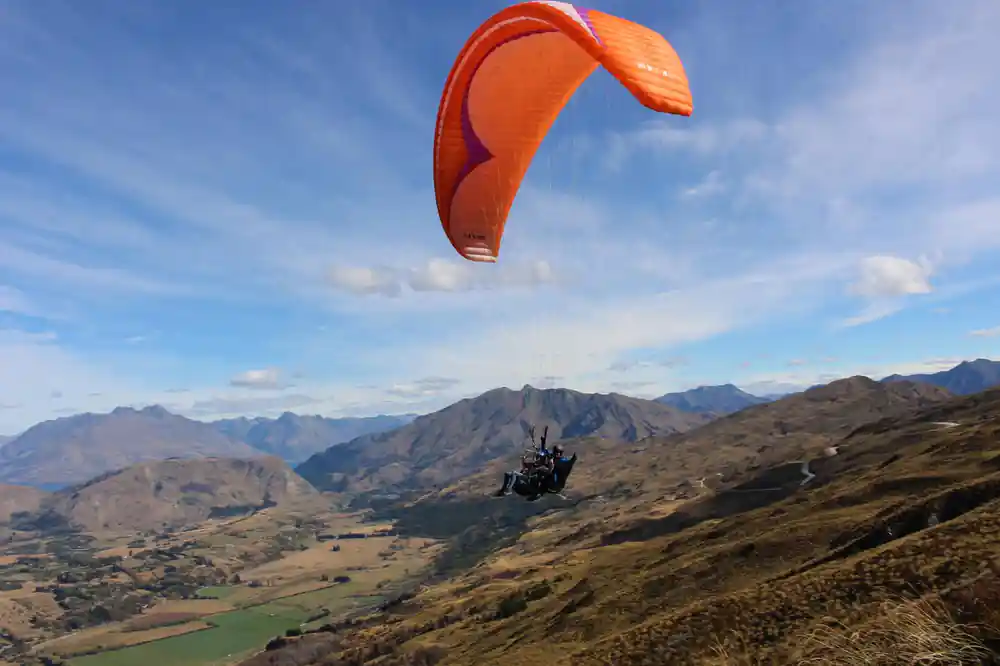
You do not fly the wing. A tandem pilot does, and that is the entire structure of the booking: an experienced pilot who controls the wing for the whole flight, from the moment it fills with air to the moment you are back on the ground. You are clipped into your own harness, and that harness is attached to the same wing as the pilot's, positioned so the pilot sits behind and above you and can see everything you can see, plus the wing itself.
The flight is run by Skytrek and launches from Coronet Peak, with the whole experience guided in English. Nothing about steering, timing, or reading the wind is your job. You are there to be flown, not to fly, and that division of labour is what makes the whole thing workable for someone who has never done it before and may never do it again.
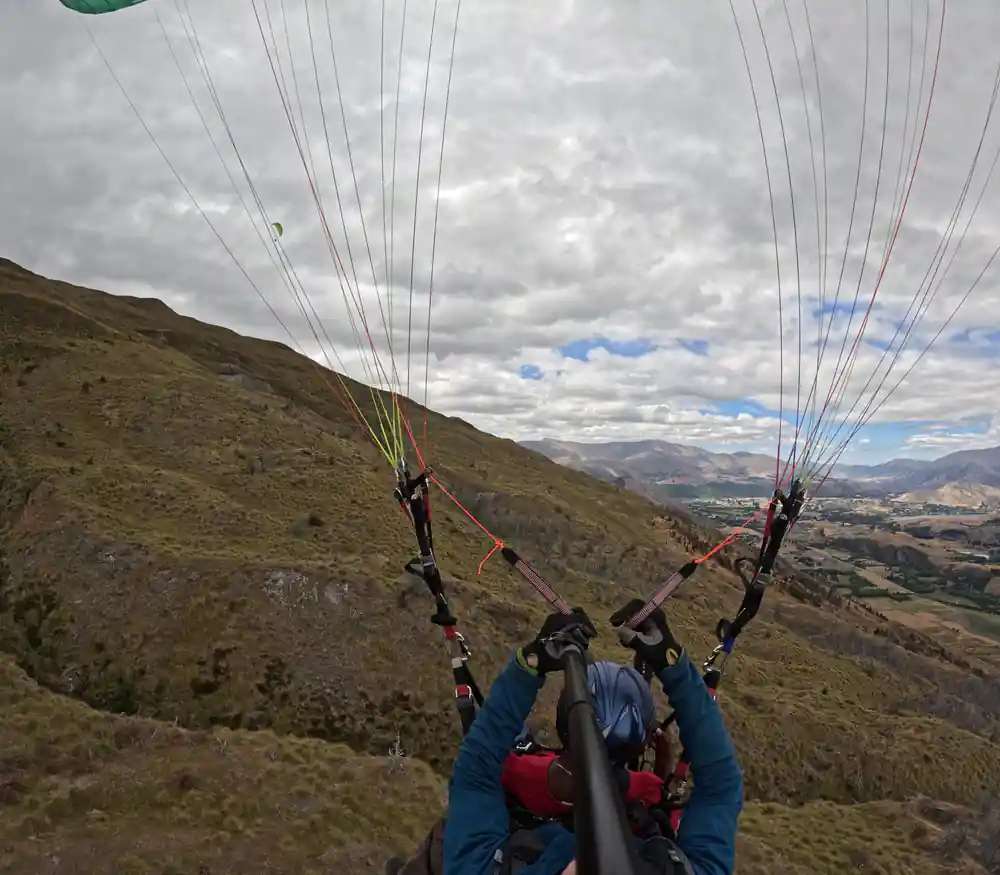
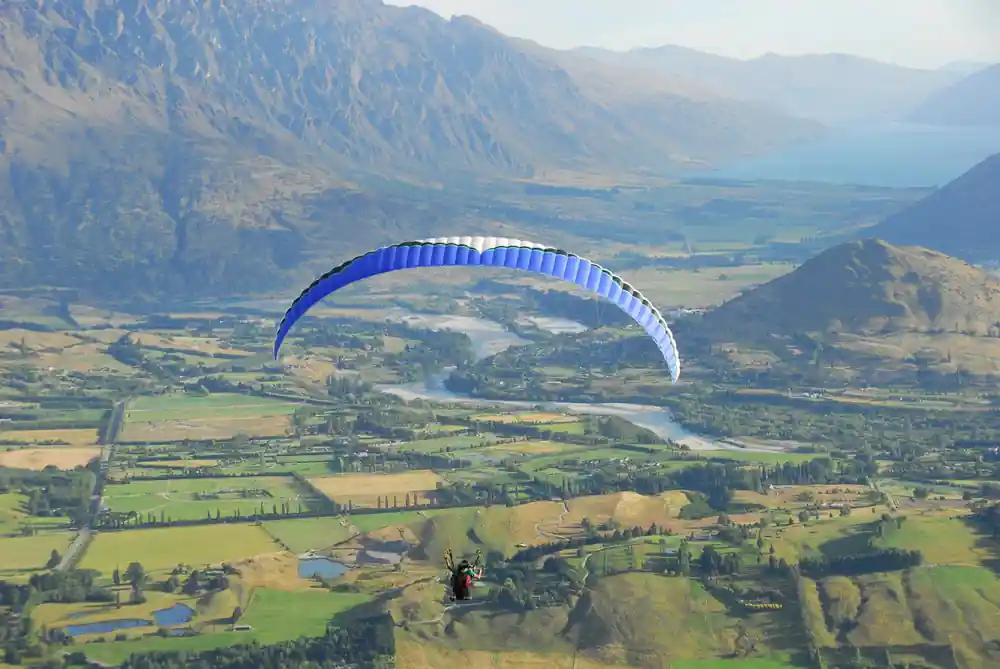
The wing open above Coronet Peak, moments before the flight begins.
The Briefing Before You Fly
Before the wing comes out and before anyone is clipped into a harness, the booking includes a twenty minute safety briefing at Coronet Peak. That is not a formality squeezed in around the flight; it is part of the ninety minutes you book, sitting alongside the drive up, the flight itself, and the drive back down. Twenty minutes is a real, deliberate slice of the day, not a five minute afterthought before the pilot waves you toward the edge.
The briefing is where the pilot explains how the launch works, what your body is expected to do in the first few steps, and how the landing will feel and what to do with your legs when it happens. None of it needs to be memorised under pressure, because it is covered on solid ground, standing still, before the wing is doing anything at all.
What Decides Whether You Fly
The single most useful thing to understand before booking is that the flight happens when conditions allow it, and not on a fixed timetable that exists regardless of the weather. Wind is the thing that decides the day. A pilot who flies tandem passengers for a living is reading the wind before you arrive and again once you are at Coronet Peak, and the flight only goes ahead once that reading says it should.
If the answer on a given day is no, that is not the operator being difficult or the booking falling through by accident. It is the same judgement that keeps every flight safe on the days it does go ahead, applied honestly on the day it says wait. Free cancellation is offered precisely because weather is the variable nobody controls, and a called-off flight is not a failure of the system. It is the system doing exactly what it is there to do.
20 minutes
Every booking includes a twenty minute safety briefing at Coronet Peak before anyone leaves the ground.
What Happens Once You're Airborne
Once the wing is open and moving, the flight itself runs to roughly twenty minutes from Coronet Peak, and for the whole of it the pilot is flying the wing, not you. A paraglider in the air behaves like an aircraft rather than a falling object: it holds a glide, it turns when the pilot shifts weight and pulls a line, and height comes off gradually rather than all at once. There is no point in the flight where the wing simply stops and drops.
Your role in the air is smaller than the word flying suggests. You sit in the harness, you take in Coronet Peak and the basin below, and the pilot manages speed, direction, and the eventual approach back to the ground. It is a guided flight from start to finish, and the guiding never stops until you are standing again.
What to Ask Before You Book
A short list of honest questions serves a nervous flyer better than a long one. Confirm the minimum age directly, since the booking is not suitable for children under four, and if you are booking on someone else's behalf, that is worth checking early rather than at Coronet Peak. Ask what happens to your booking if the flight is called off for weather. The answer is free cancellation, because the day sometimes does not cooperate.
It is also worth asking what the twenty minute briefing covers for your specific flight, since a straight answer to that question tells you more about how the operator runs the day than any promise ever could. A tandem pilot who is happy to walk you through the briefing content before you arrive is telling you something useful about how seriously the ground work is taken.
Check availability for your Queenstown flight
from US$217Reserve now & pay later