The quick version
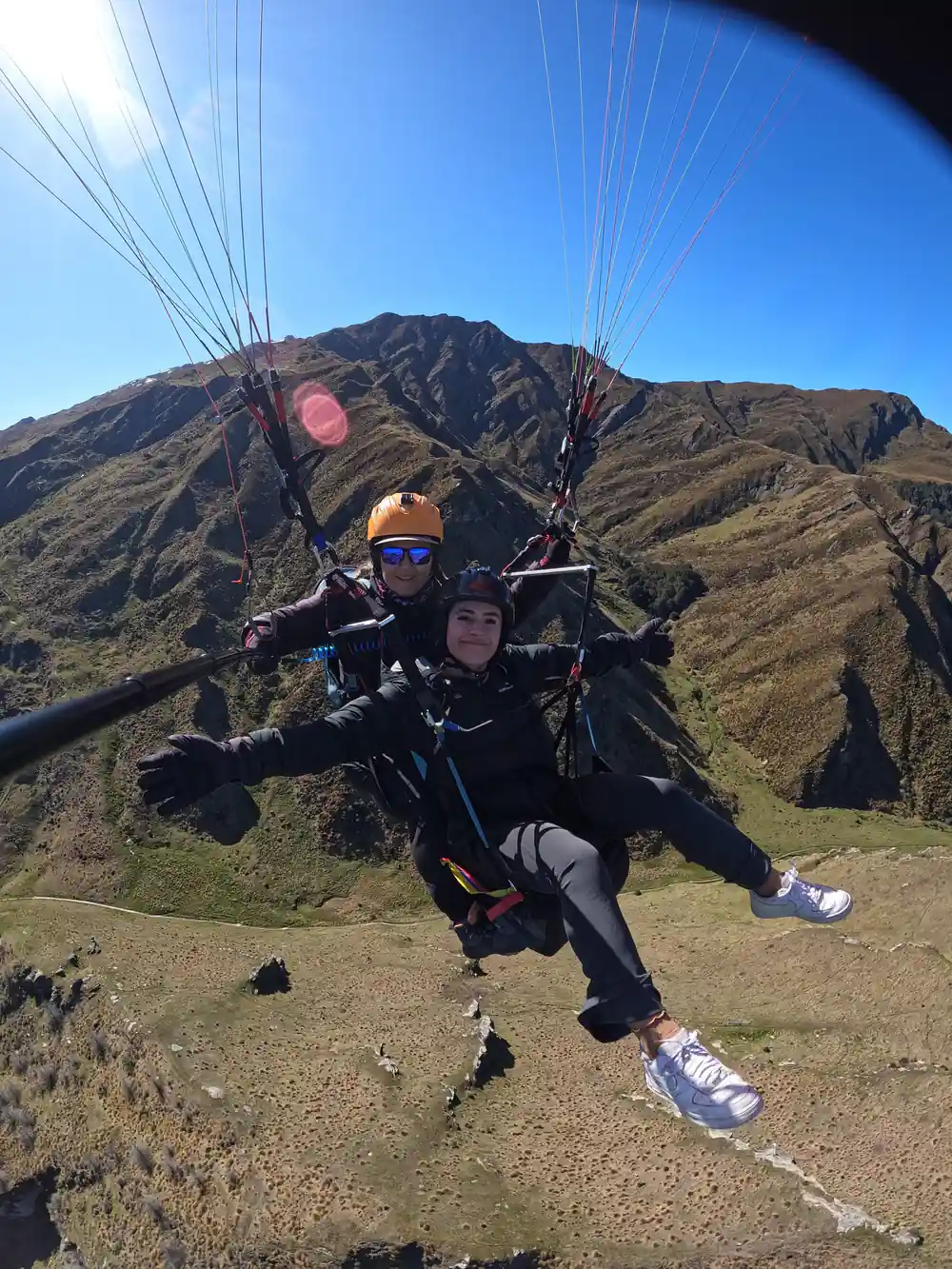
- You run a few steps down the slope with your pilot strapped in behind you, and the run stops being a run the moment the wing is flying.
- Your hands stay on the harness straps, not on any controls, and there is nothing you need to do except sit back and talk to your pilot if you want to.
- A flying wing can be slowed right down, so the landing is a walk-on arrival with your feet finding the ground rather than a drop or an impact.
- Most of that fear is tied to standing near an edge with solid ground under one foot, and a wing in open air does not give your mind the same cue.
The Briefing at Coronet Peak
The flight starts with a safety briefing at the top of Coronet Peak, once the van has brought you up from Camp Street. Your pilot talks you through what is about to happen in plain terms: how the harness sits, where your hands go, what your legs do during the run, and what he needs from you at each stage. Nobody needs to remember all of it under nerves. The pilot is the one flying the wing; your part is to follow his lead once you are standing at the edge of the slope.
This is also the point where a tandem paragliding queenstown flight stops being an abstract idea and becomes a specific sequence of things your body is about to do. You are shown the wing laid out on the grass, the lines running to the harness, and where you will be clipped to your pilot. It is a short, practical conversation, not a lecture, and it ends with you standing where the flight will actually begin.
Clipped In and the Run to the Edge
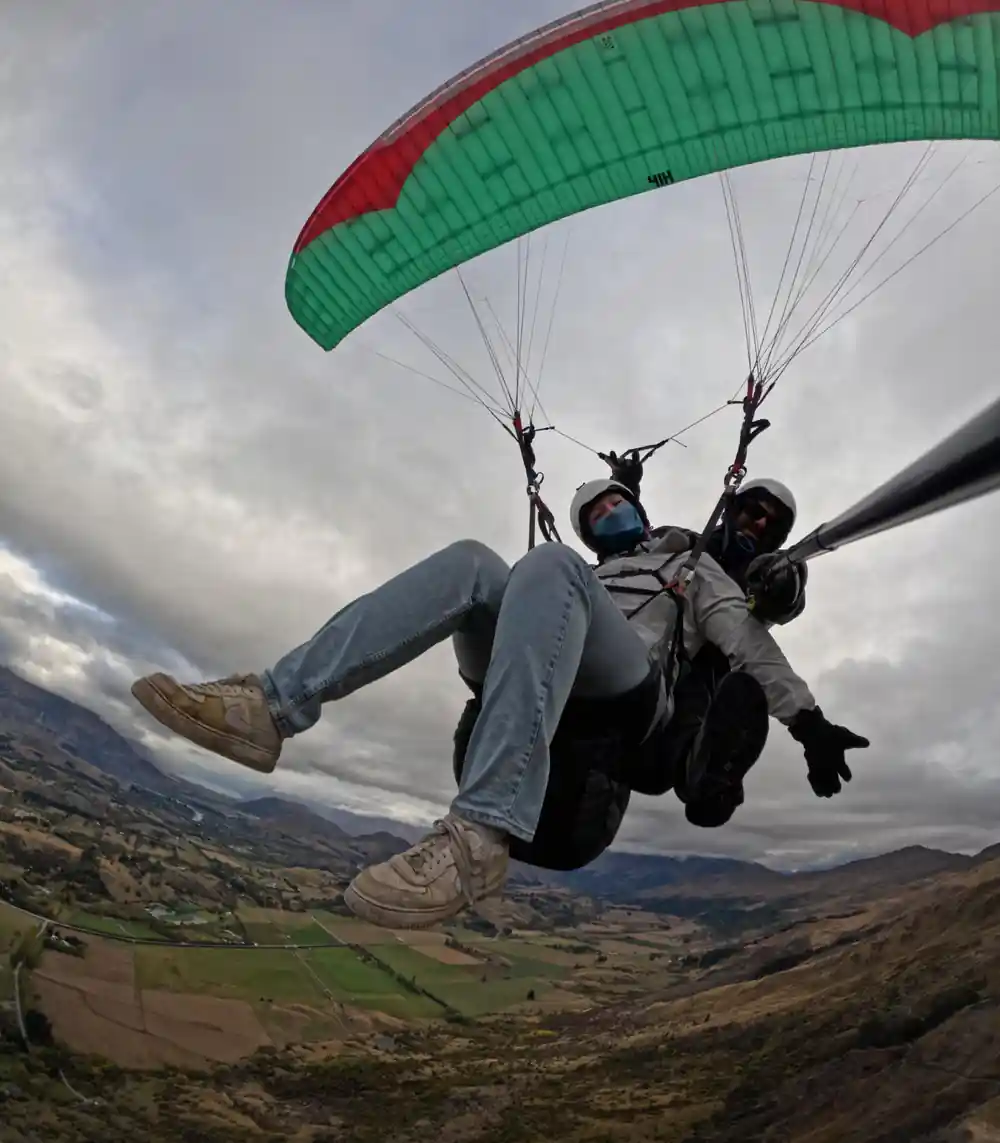
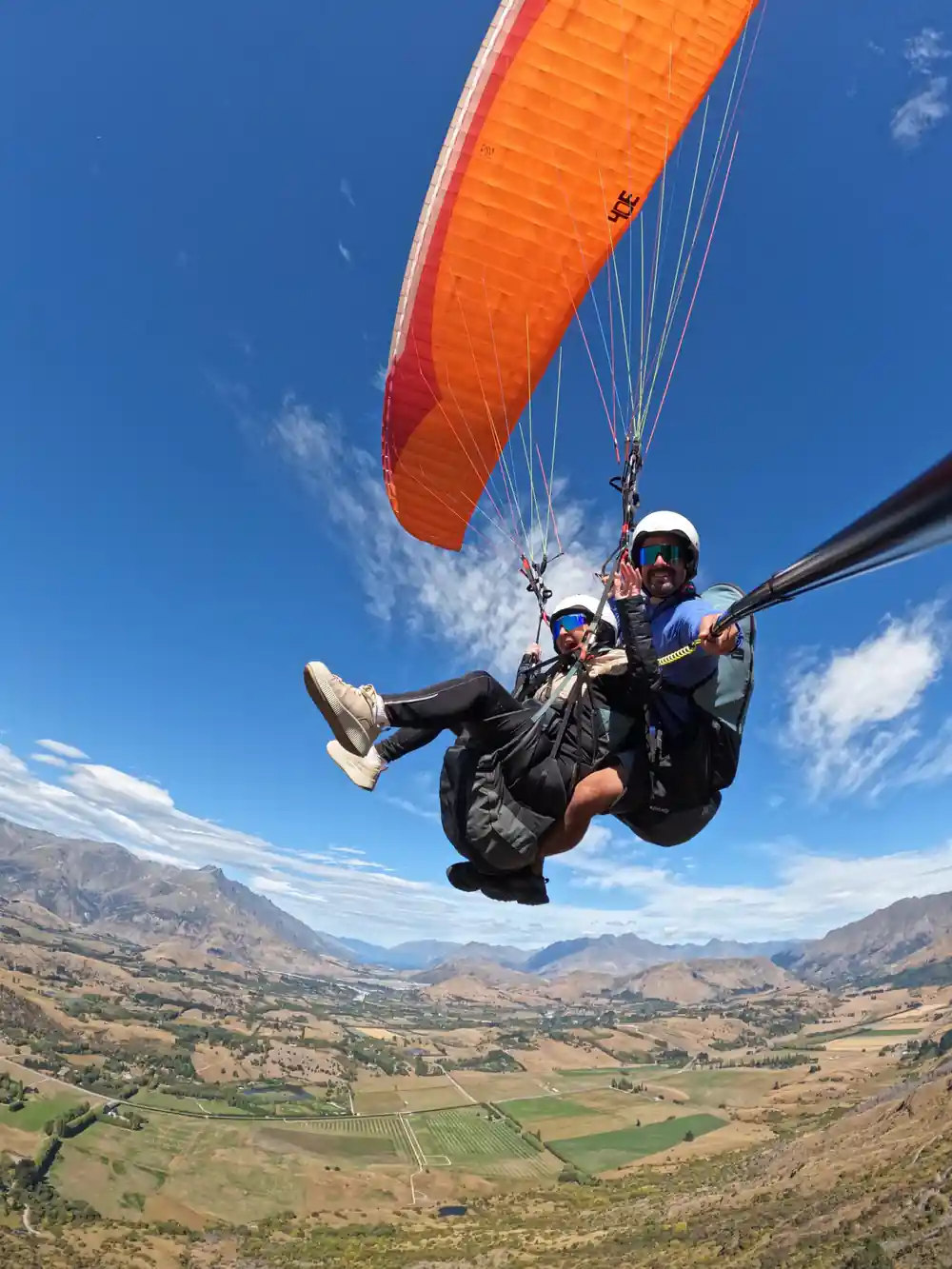
Your harness clips directly to your pilot's, so the two of you are one unit facing the same direction, him behind and slightly above you. He carries the weight of the equipment; you carry almost nothing. Once the wing is inflated and sitting correctly overhead, the pilot gives the word and you both walk, then jog, then run a short distance down the slope together. It looks, from the ground, like the most ordinary part of the whole flight, and from the inside it is the part that goes fastest.
The run down the slope is the entire mechanism of a tandem launch: speed across the ground gives the wing enough air moving over it to fly. There is no ledge to step off and no countdown. You are running, and then, within a few strides, you are not touching the ground any more, because the wing is doing the work the ground was doing a moment before. It stops being a run the instant it is flying, which is a strange thing to feel the first time it happens.
The Moment the Ground Stops Mattering
People ask if paragliding over Queenstown feels like falling, and the honest answer is that it does not, because falling has a direction and a speed that keeps changing under you, and this does not. The wing is already flying by the time your feet leave the slope, so there is no drop to brace for. Your weight settles into the harness seat the way it would settle into a chair, just with open air underneath instead of a floor.
What changes is not a sensation of falling but a sudden change in what the ground means to you. A second earlier it was the thing under your feet deciding everything; now it is a shape a long way below, doing nothing in particular. Passengers describe the moment differently depending on what they expected, but the physical fact underneath every description is the same: you are sitting, supported, and moving forward through the air rather than dropping through it.
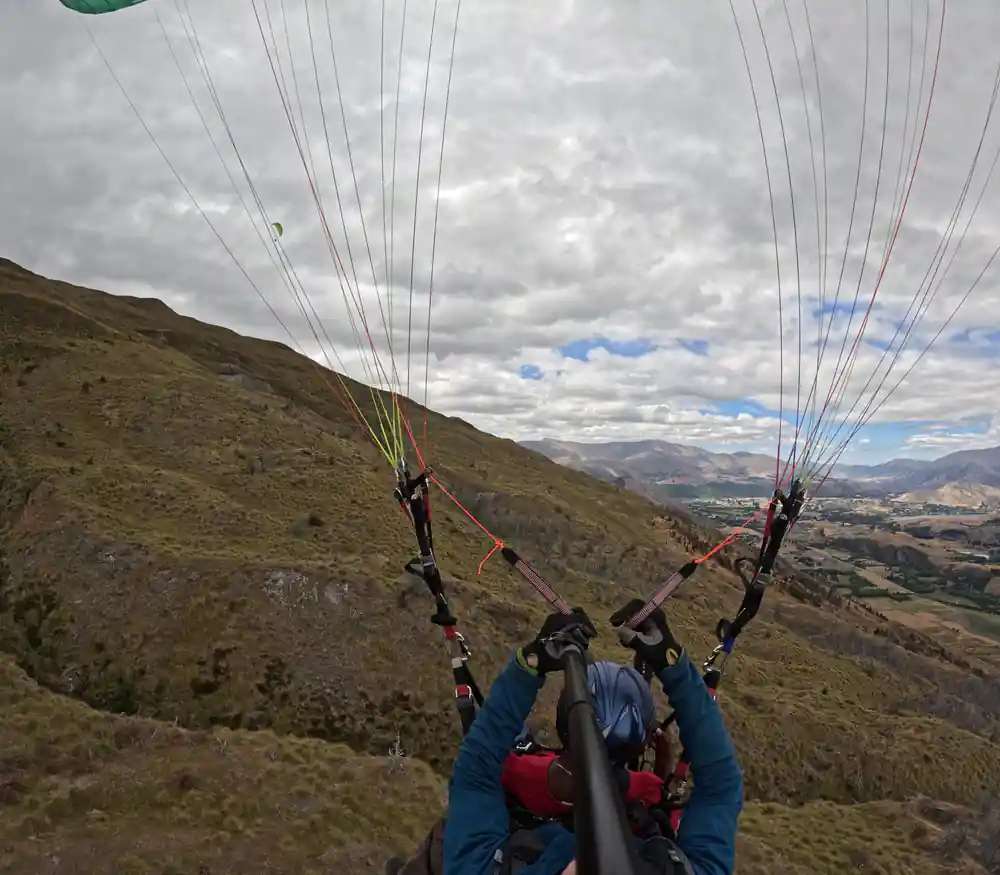
The moment the wing takes your weight and the ground stops mattering.
Your Hands and Talking to the Pilot
There is nothing to steer and nothing to hold on to that requires a grip. Most passengers rest their hands on the harness straps in front of them or simply let them sit in their lap once they realise the seat is doing all the supporting. The pilot is flying the wing from the risers above and behind your head, and none of that machinery needs your hands anywhere near it.
You can talk to your pilot the whole way, and most people do, at least for the first few minutes. He is right behind you, close enough that a normal speaking voice carries over the wind, and he will usually point things out below without waiting to be asked: the shape of the basin, a landmark, whatever the light is doing that afternoon. If you would rather stay quiet and just look, that is fine too. Neither answer changes what happens next.
Above the Wakatipu Basin
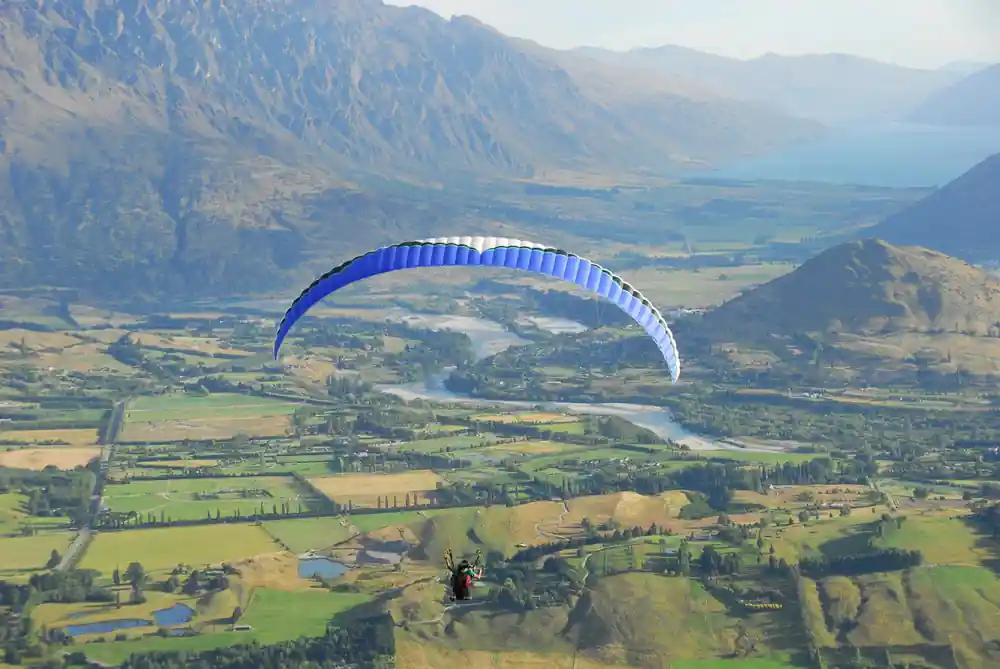
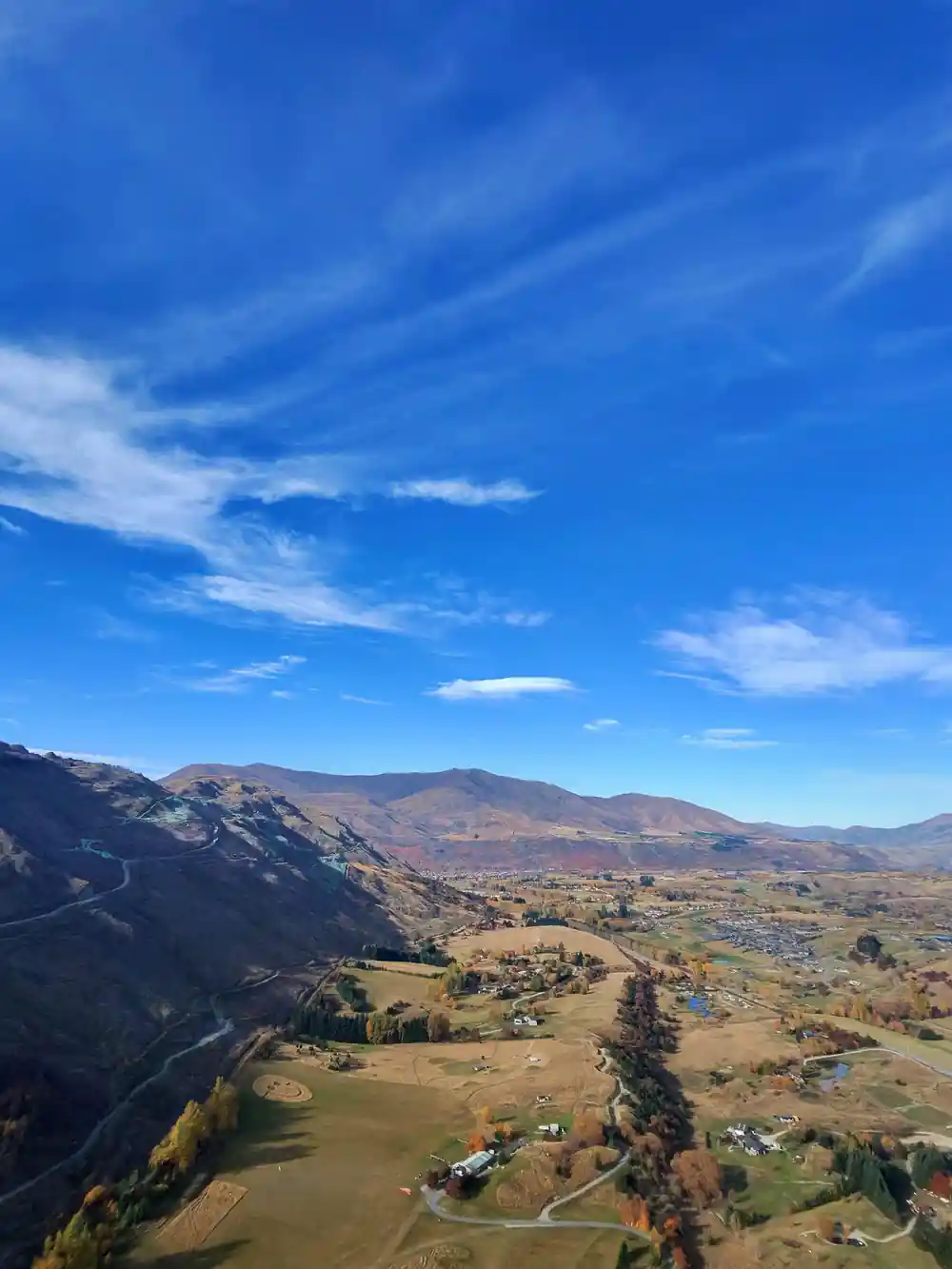
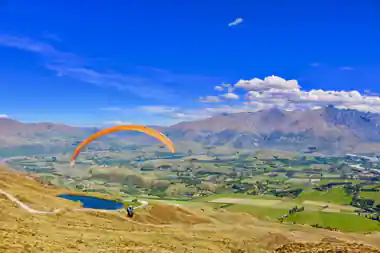
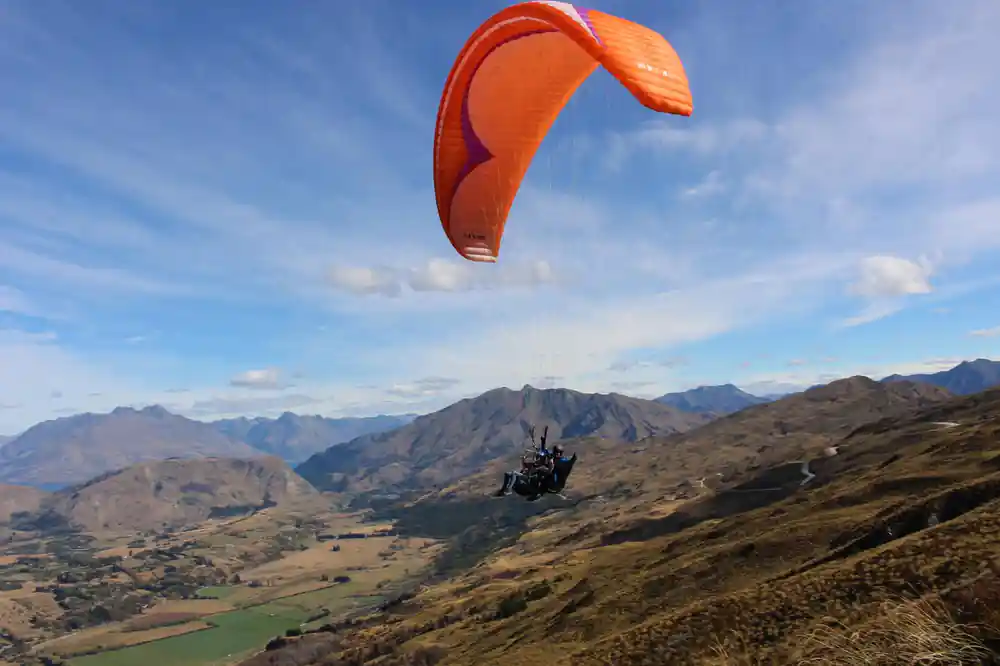
Queenstown sits in a basin around Lake Wakatipu, ringed by mountains on every side, with the Remarkables range standing on the far shore. From the air the whole shape of the place becomes visible at once in a way it never does from the town itself: the lake as one long piece of water rather than a shoreline you walk along, the roads as thin lines threading between hills, the town small against the mountains around it.
Coronet Peak is the ski field north of town, reached by the switchback road that climbs out of the valley, and launching from up there means the flight passes over a genuinely large piece of that landscape rather than a single view held for a few seconds. It is the kind of picture that a car or a gondola shows you a slice of at a time. From a paragliding queenstown flight it arrives as one continuous, moving frame.
Fear of Heights, and Why This Might Feel Different
A fear of heights is usually a fear tied to edges: a ladder, a balcony rail, a cliff path, anywhere that part of you is still in contact with something solid while a drop sits close by in view. That kind of fear has a specific trigger built into it, a nearby edge and a foot still on the ground, and both of those cues stop applying the moment the wing is flying.
That does not mean the fear is guaranteed to disappear, and no honest page should tell you it will. Some passengers who describe themselves as afraid of heights find that the anxiety they expected simply does not turn up once they are airborne, because there is no edge to look over and no rail to grip. Others feel it fully. There is no reliable way to know in advance which one describes you, only that the two situations, standing at an edge and sitting in a flying wing, are not the same thing to a nervous mind.
The Landing Back at Coronet Peak
A wing that is flying can be slowed down, and that single fact is what makes the landing gentle rather than an impact. As the ground comes back up to meet you, the pilot flares the wing, which trades its forward speed for lift and brings your descent almost to a stop right at the point your feet reach the grass. You do not brace for a hit because there is not one to brace for.
The result feels closer to stepping off a moving walkway than landing after a fall: your feet find solid ground again, you take a step or two to catch your balance the way you would after standing up too fast, and the flight is over. The pilot unclips you, and the same short walk that carried you to the edge of the slope, run in reverse, carries you back to where you started.
Ready to feel the moment the ground stops mattering?
from US$217Reserve now & pay later
Good to know first
What actually happens at the launch site?
How do you take off in tandem paragliding?
Does tandem paragliding feel like falling?
Can you talk to the pilot during the flight?
What do you do with your hands while flying?
How does the landing work?
What if I am afraid of heights?
Are photos or video included on the flight?
The flight, step by step
The safety briefing
At the top of Coronet Peak your pilot explains the harness, the run and what happens at each stage before you walk to the slope.
Clipping in together
Your harness clips to your pilot's so you face the same direction, him behind and slightly above, carrying the equipment's weight.
The run down the slope
You walk, then jog, then run a short distance together while the wing sits overhead, gathering the air it needs to fly.
Airborne over the basin
Within a few strides your feet leave the ground and the run becomes a flight, with the Wakatipu basin opening out below.
Settling in and talking
Your hands rest on the harness straps. You can talk to your pilot the whole way, or stay quiet and just look at the view.
The landing at Coronet Peak
The pilot flares the wing near the ground, slowing it down so your feet find the grass gently rather than dropping onto it.