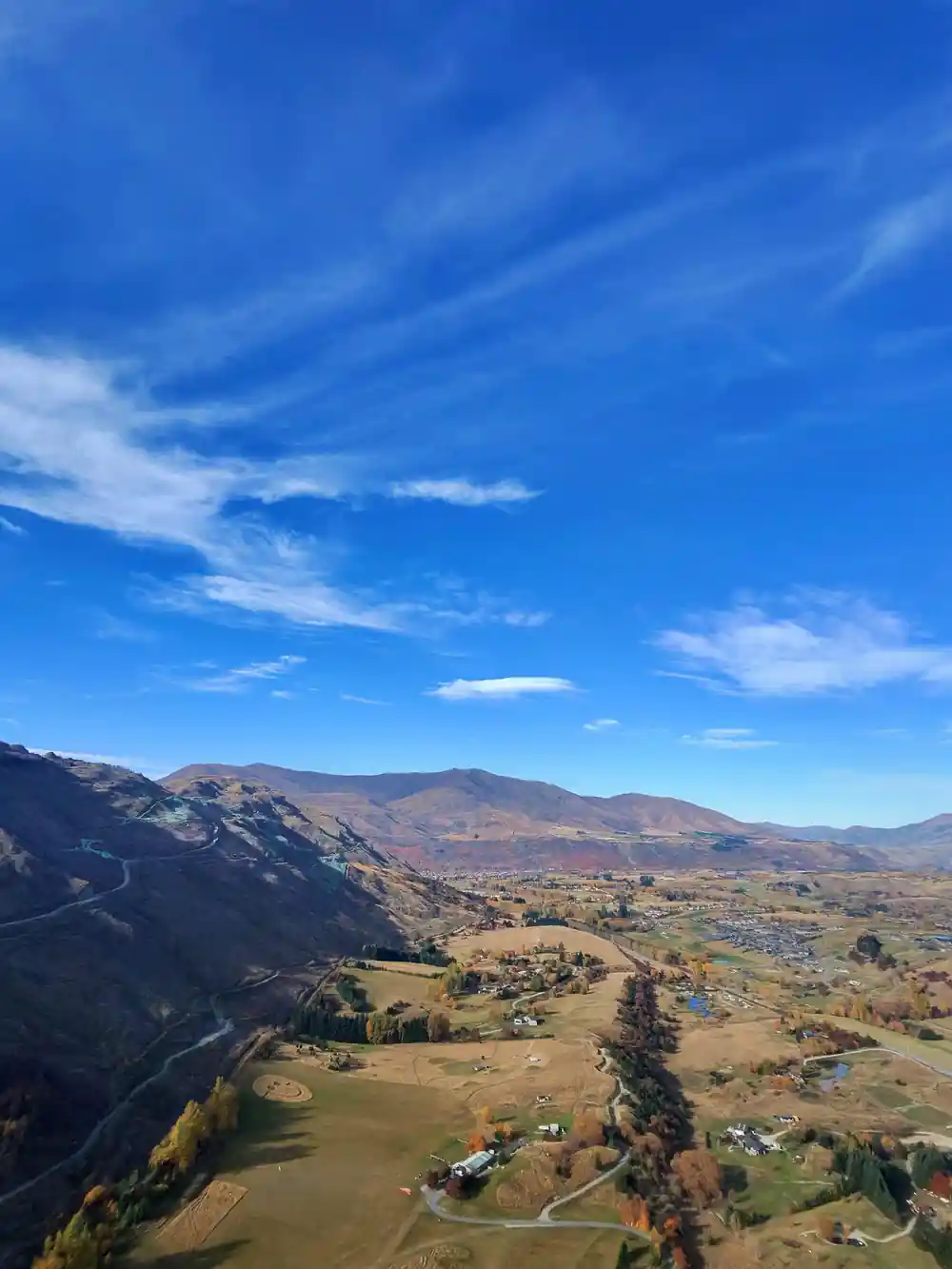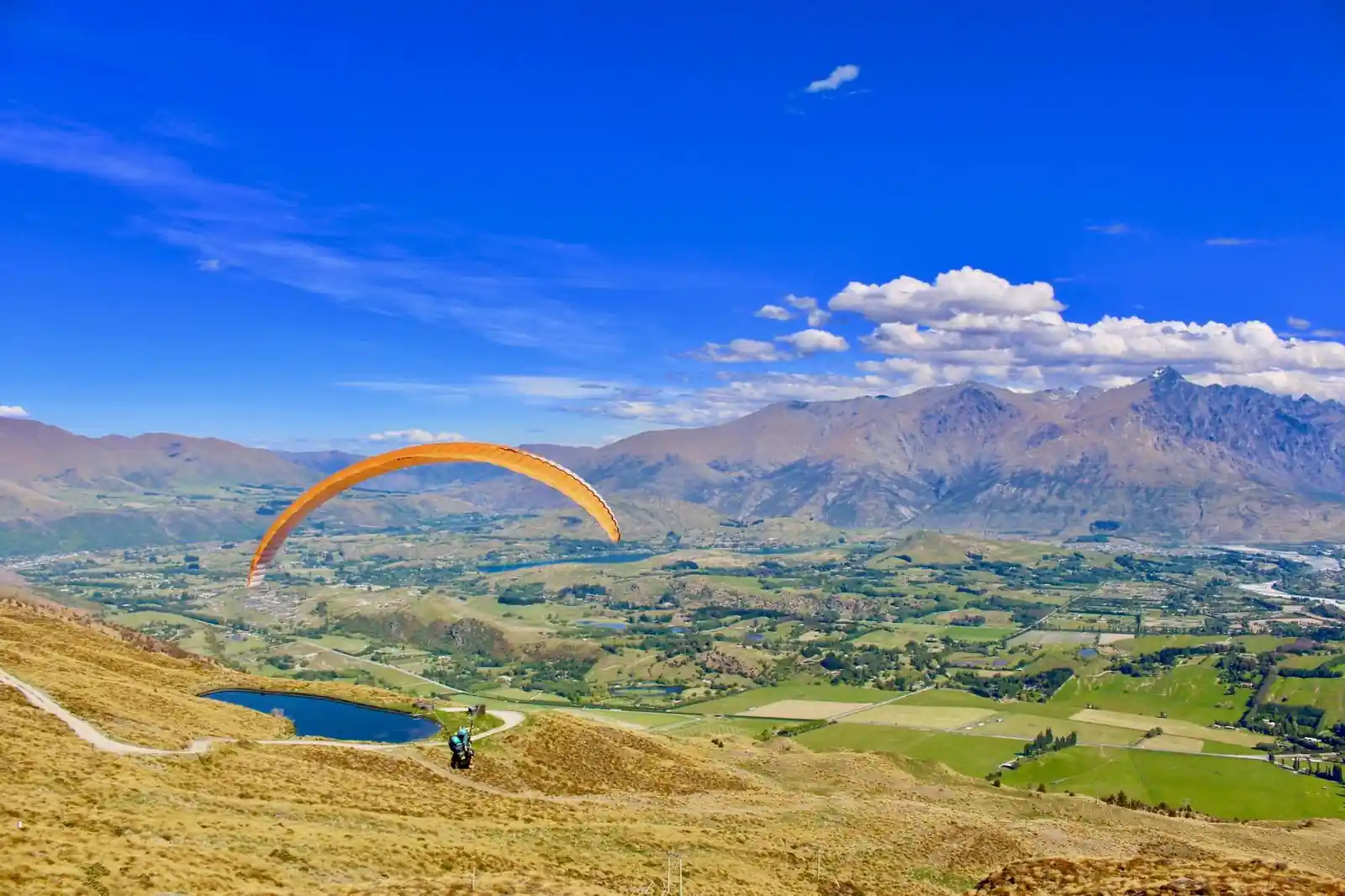
The quick version
- The flight leaves when the wind over Coronet Peak allows it, not at a printed departure time, so build flexibility into the day you book it for.
- Calm streets in Queenstown tell you nothing about the air above the launch, and a breezy town morning can sit above a flyable ridge.
- Coronet Peak is Queenstown's ski field, so a colder-month booking is worth a direct question to the operator about access and scheduling.
- Free cancellation is offered, so put the flight early in your stay rather than your last morning, and a cancelled day still has somewhere to go.
The Booking You Cannot Set a Time For
Most things you book in Queenstown happen at the time printed on your ticket. A jet boat leaves when it leaves, a gondola runs on a schedule. Tandem paragliding at Coronet Peak does not work that way. The flight itself takes up only a small part of the ninety-minute booking, and the day it happens on is decided by the air above the launch, not by a departure board. That is the trade a reader is making when booking this rather than a scheduled activity: a mountain view in exchange for a day that moves.
This is not a complaint about the operator. A wing needs air moving in a narrow, predictable way to be safe to launch and fly, and that window opens and closes on its own timetable. A pilot who has flown Coronet Peak for years is not guessing; they are reading the mountain in front of them, on the day, and deciding whether today is one of the days it works. Planning around that, rather than around a fixed hour, is the actual skill a visitor needs when they put this on the itinerary.
What the Pilot Is Actually Reading
A weather app gives you one number for the whole town: a forecast for Queenstown, generalised across a basin ringed by mountains. That number tells a pilot almost nothing useful about Coronet Peak, because the launch sits up the switchback road above the valley floor, exposed to a different layer of moving air entirely. What the pilot reads instead is the mountain itself: the state of the sky over the ridge, and the way it is behaving right now, not what an app predicted for it the night before.
That is why nobody can tell you from town whether the flight is on or off. The call gets made at or near the launch, close to the time of the flight, by someone standing in the air that matters rather than looking at a screen showing the air over the town centre. It is a slower method to confirm than checking an app, and a more reliable one, and a visitor who understands that going in books with the right expectations.
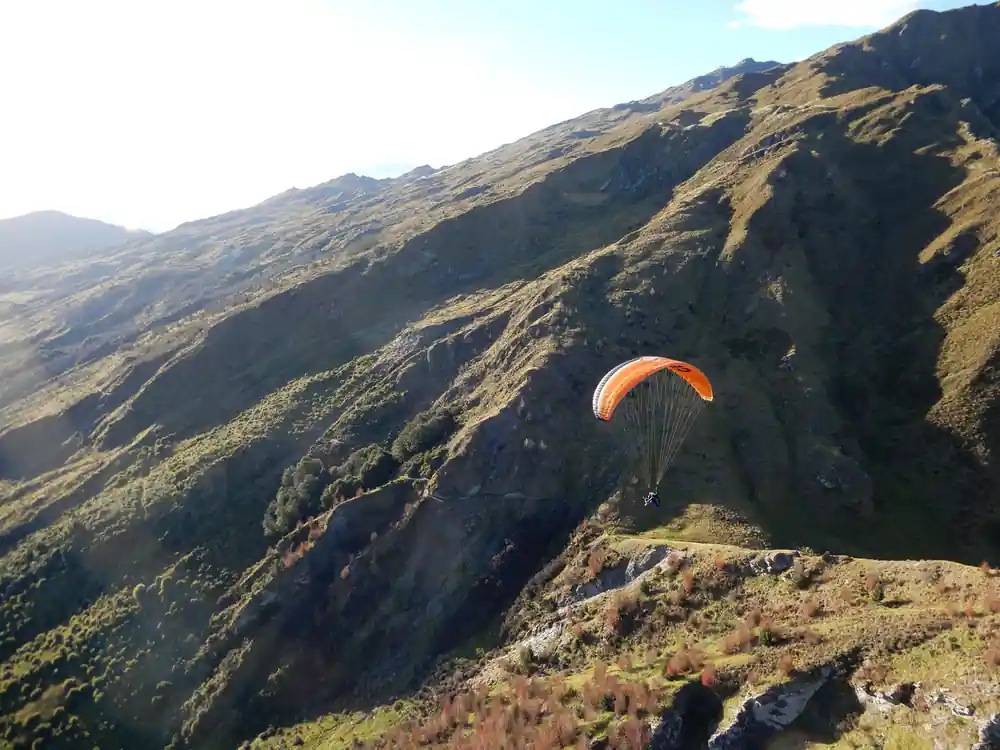
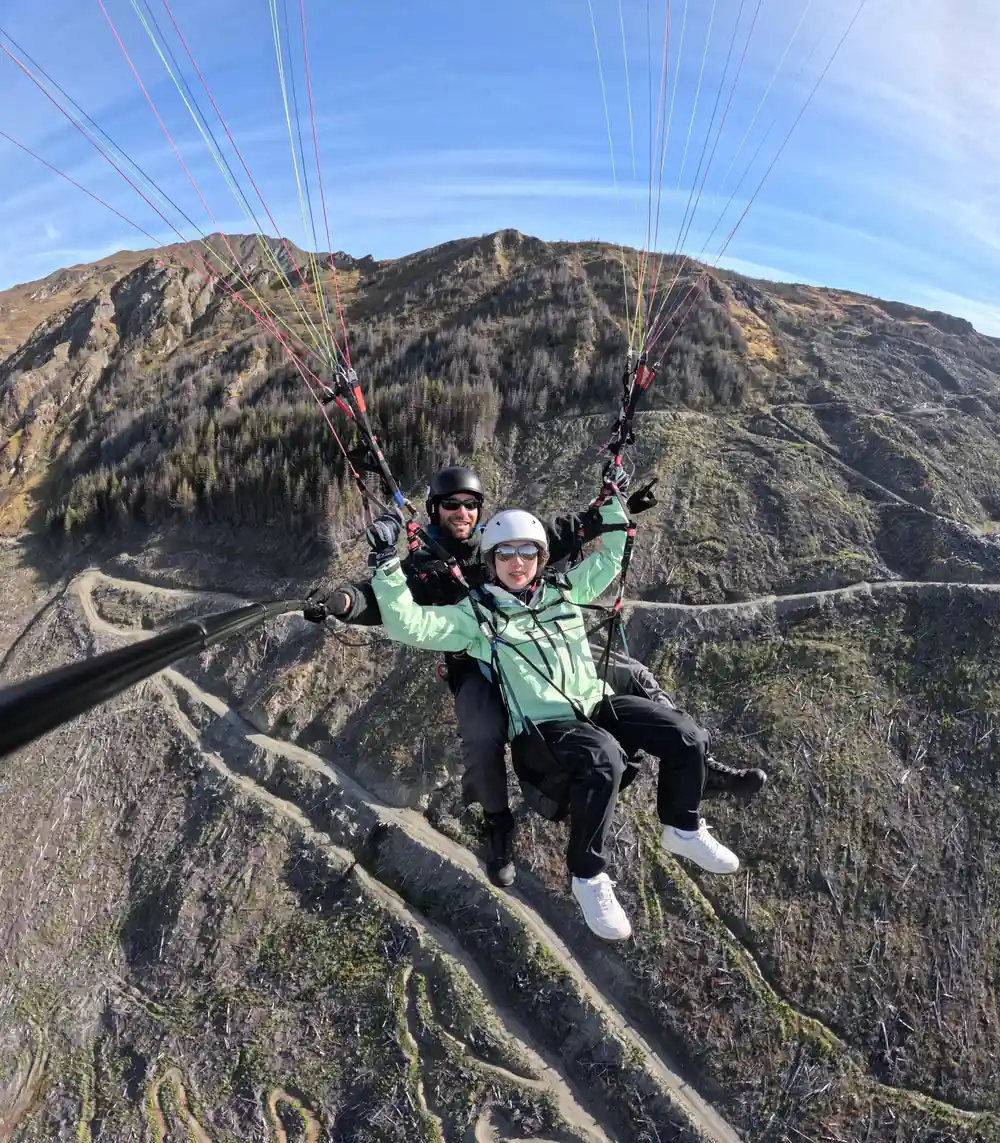
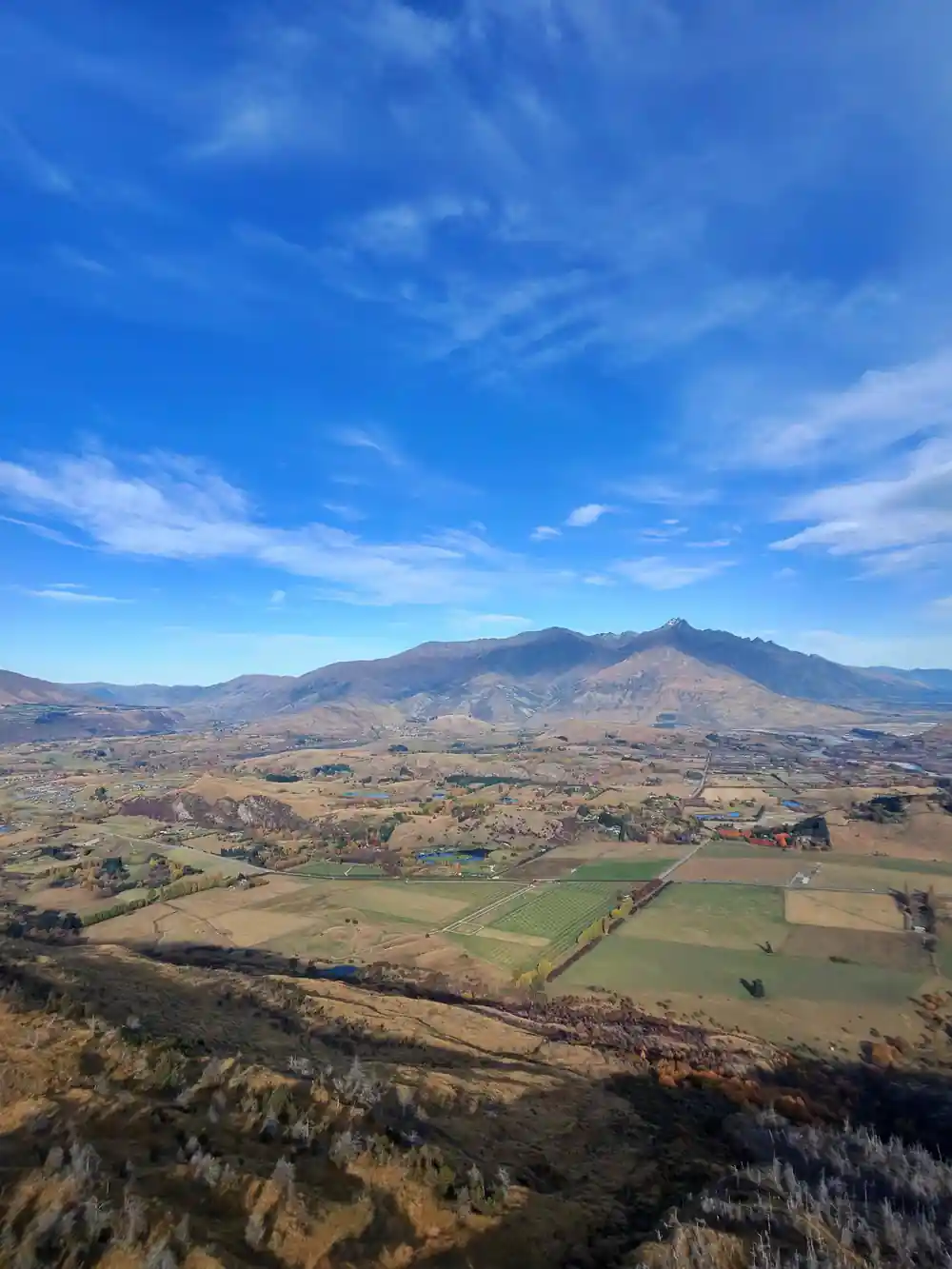
The ridge above Coronet Peak, the exact spot where the day's wind gets its final read.
Wind in the Streets Is Not Wind on the Ridge
Queenstown sits low, in a basin around Lake Wakatipu, with the Remarkables rising on the far shore and the town itself sheltered by the terrain around it. A calm morning on the waterfront, with the flags outside the shops hanging still, tells you almost nothing about what the air is doing at altitude on Coronet Peak. Wind behaves differently once it clears the ridge line; a mountain launch catches movement the streets below never feel.
The reverse happens just as often. A breeze that makes flags snap in town can sit above a launch that is, at that moment, glassy and flyable. A visitor who watches the trees outside their hotel and concludes the flight must be off, or must be on, is reading the wrong location. The only read that counts is the one taken at Coronet Peak itself, and that is the pilot's job, not a guest's.
The Winter Question at a Ski Field
Coronet Peak is not only a paragliding launch. It is Queenstown's ski field, reached by the same switchback road that carries skiers up in winter. That single fact changes the questions worth asking if you are booking a flight for the colder months rather than midsummer: a mountain built to hold snow and run ski lifts is a mountain with its own winter conditions to manage, separate from whatever the rest of Queenstown is doing that day.
None of this means a winter flight is unlikely, and none of it means it is routine. It means a colder-month booking deserves a direct question to the operator rather than an assumption either way: ask how the ski season affects paragliding access and scheduling at Coronet Peak, and ask it before you build the rest of your day around the flight. That is ordinary prudence for a mountain that does two jobs at once, not a reason to worry.
20 min
Of the ninety-minute booking, only about twenty minutes of it is spent flying above Coronet Peak.
Notice, Cancellation and What to Ask
A weather-dependent flight also means a notice period that will not match the rest of your holiday planning. Do not expect confirmation weeks out, the way you would for a restaurant table. Ask the operator directly how and when they will tell you the flight is going ahead, and what the plan is if the call changes close to your slot. A straight answer to that question before you book is worth more than any guess a page like this one could offer about how it usually goes.
What is fixed, and worth knowing before you ask anything else, is that free cancellation is offered on this booking. That removes the worst version of the risk: committing to a slot with no way to change course if the weather, or your own plans, does not cooperate.
Where to Put This in Your Trip
The single most useful thing you can do with a weather-dependent flight is give it somewhere to fail. Book it for the first free morning of your stay rather than the last, and a cancelled slot still leaves you days to try again before you fly home. Book it for your final morning instead, and a cancelled slot leaves you with nothing to fall back on.
This is not a comment on how often flights go ahead. It is simply the position that keeps a weather call from wrecking a holiday: early in the stay, with free cancellation covering the booking itself, and a direct question to the operator if you are travelling in the colder months and want to know what to check before you build the rest of your day around it.
Check dates for a paragliding flight from Coronet Peak
from US$217Reserve now & pay later