The quick version
- A tandem wing is built to fly within a weight range, not against one fixed figure, so give Skytrek your honest weight when you book.
- Children under four aren't taken tandem paragliding at Coronet Peak. Above that age, the same flight suits a teenager or a grandparent.
- At Coronet Peak, you and the pilot run a short distance downhill together before the wing takes your weight off your feet.
- The flight itself asks nothing of your body. What matters beforehand is whether you can manage a few running steps on a slope.
A Tandem Wing Flies Within A Range, Not A Cut-Off
A tandem paraglider wing is built and certified to carry a span of combined weight, pilot and passenger together, rather than one fixed figure. Go too far under that span and the canopy doesn't load the way it's designed to; go too far over it and the same is true from the other direction. Managing weight as a range, rather than a single yes or no cutoff, is normal for this kind of flying.
That's why the practical move is to tell Skytrek your actual weight when you book, rather than rely on a number you've seen quoted somewhere else. They can then tell you plainly whether the current wing and pilot pairing suits you, on the day, for your booking.
Height doesn't enter into it the same way. Being tall or short changes very little about how the flight goes; weight, confirmed directly with the operator, and the short run at launch are what actually matter for a Queenstown paragliding booking.
The Age Rule Is Simple: Under Four Doesn't Fly
Skytrek's age rule for this flight is a minimum of four years old. Below that, a child isn't taken tandem paragliding at Coronet Peak; above it, the same booking applies to a fourteen-year-old and a seventy-year-old alike.
On its own, an age number tells you little about whether a particular young child, or a particular older adult, is a good fit for the flight. What tends to matter more, once someone clears that minimum, is covered in the next section: the one thing everybody has to physically do before the wing takes over.
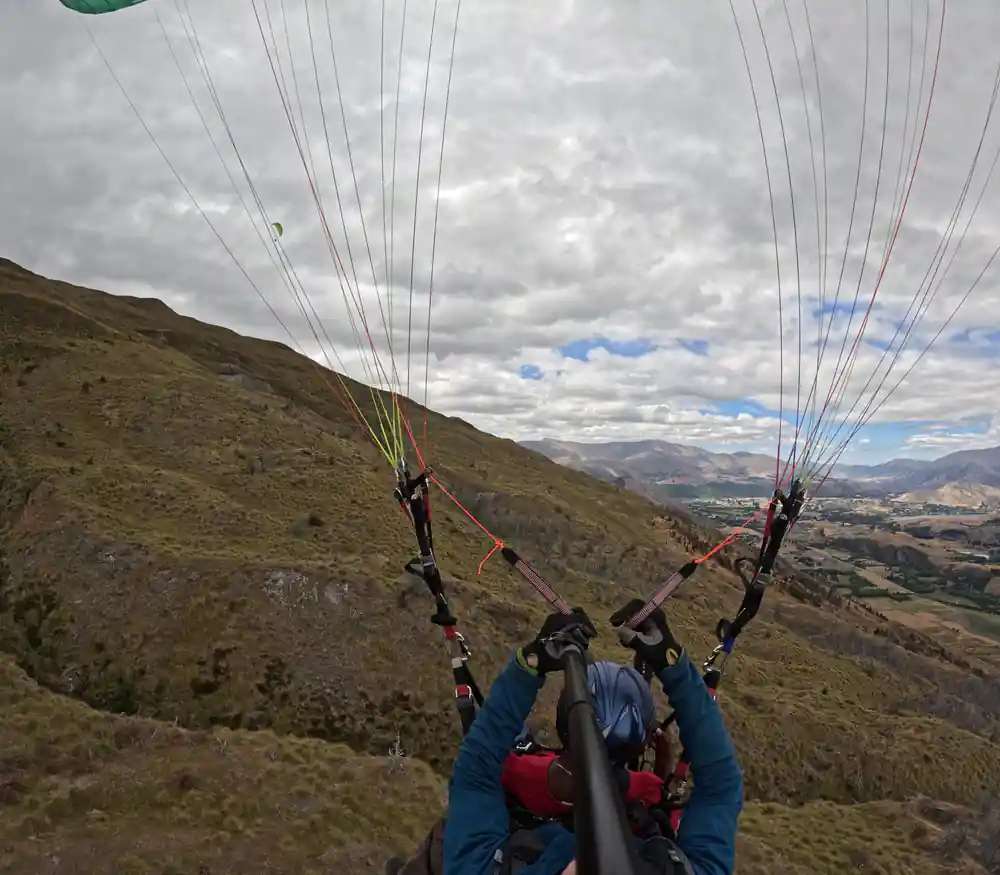
The last few running steps at Coronet Peak, just before the wing takes over.
The One Thing You Actually Have To Do
After the briefing at Coronet Peak, the pilot clips your harness to theirs, and together you run a short distance down the slope. It isn't a sprint and it isn't far, but it is a run: both of you moving forward on your own legs until the wing catches enough air to lift you both off the ground.
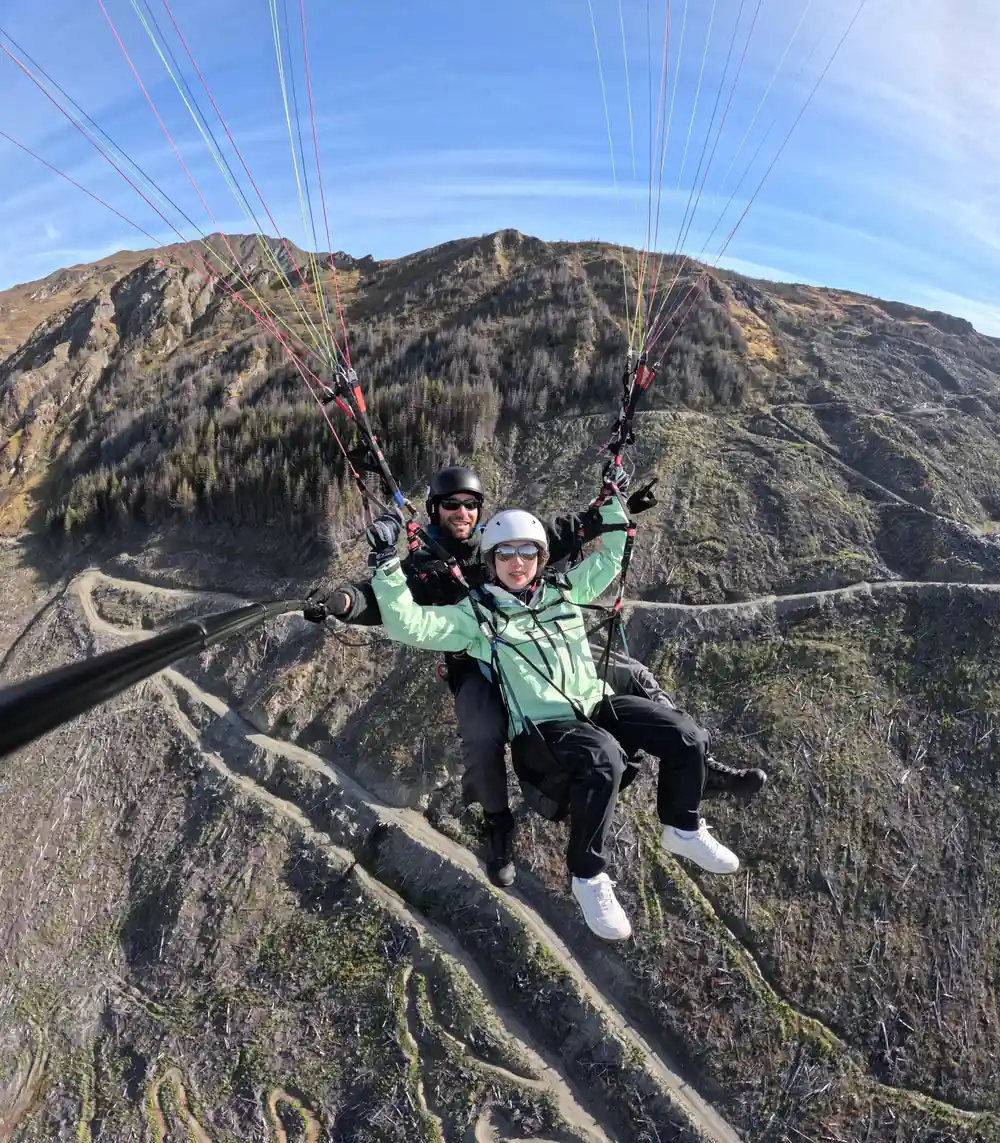
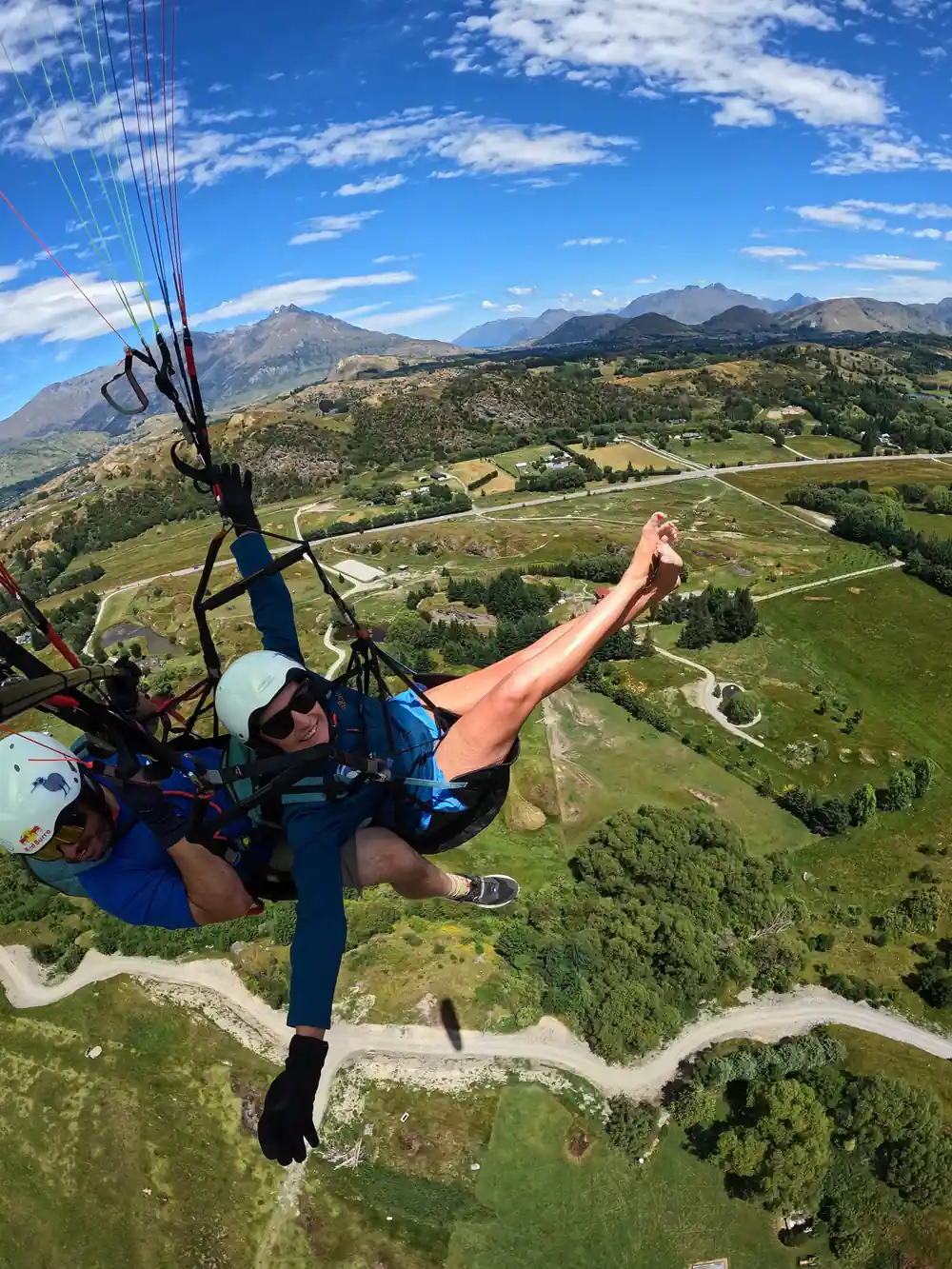
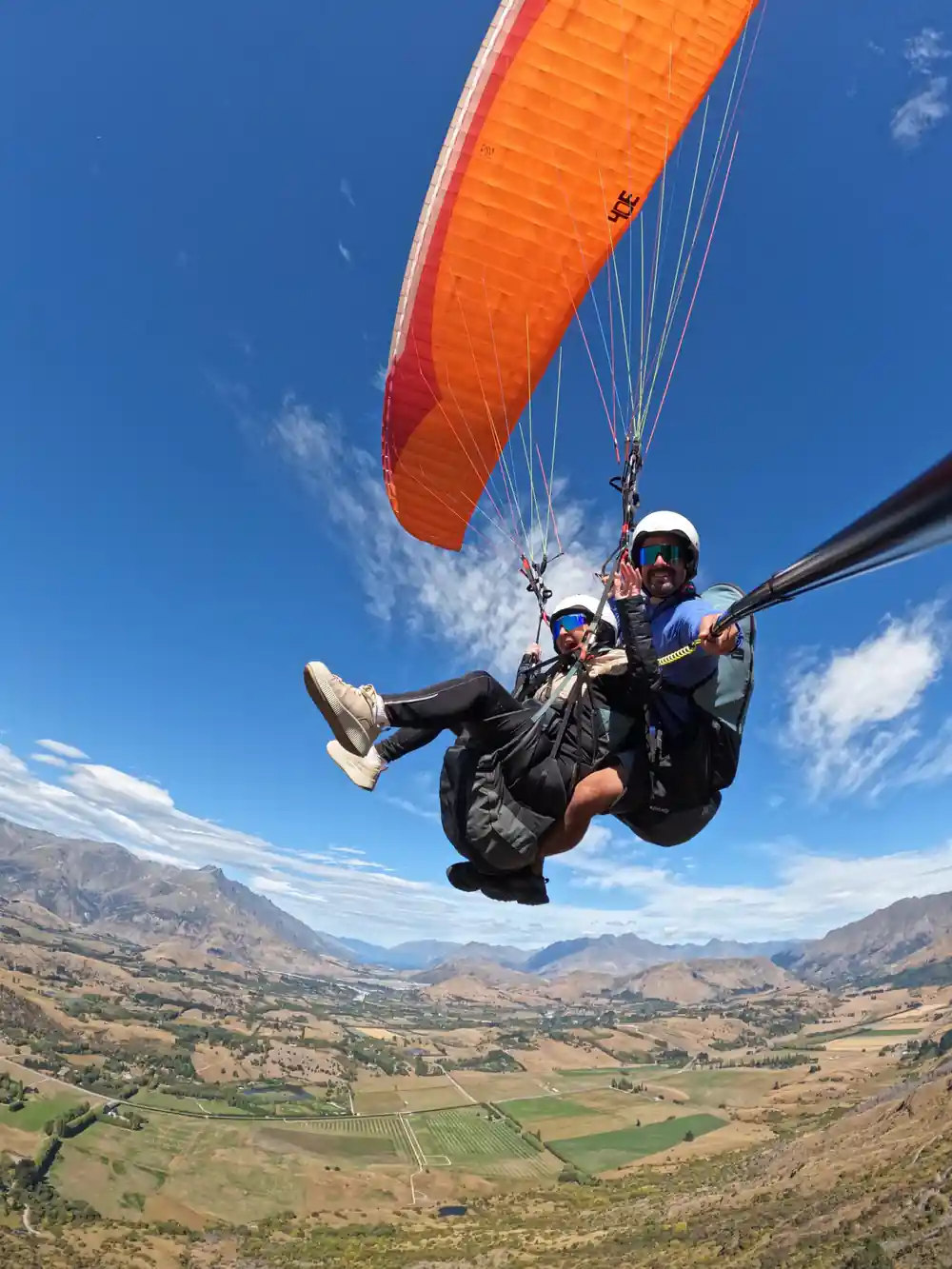
That moment, more than any number on a form, is the real physical test of this flight. Once you're airborne the pilot is doing the flying and steering, and there's nothing left for a passenger to do but sit in the harness for the ride back down to Camp Street.
The Ninety Minutes, Not Just The Flight
The booking runs about ninety minutes door to door, starting at the Skytrek desk inside the Ziptrek shop on Camp Street in central Queenstown. From there it's roughly twenty minutes by van up the switchback road to Coronet Peak, twenty minutes for the safety briefing once you arrive, twenty minutes in the air, and another twenty minutes back down to Camp Street.
Add that up and the flight itself, the twenty minutes most people are booking for, is the smallest single piece of a longer morning or afternoon. Roughly forty of the ninety minutes are spent riding in the van, another twenty standing through the briefing, and only the last twenty are the part with a wing attached to you.
Under 4
The only age rule at Coronet Peak: children under four aren't taken tandem. Above that, the same flight suits a teenager or a grandparent.
Fitness Doesn't Decide This, Mobility Does
You don't need to be an athlete. Two thirds of the booking is spent sitting in a van or standing through a briefing, and none of that asks anything of your body. Cardiovascular fitness, in the gym sense, has almost nothing to do with whether this flight suits you.
What matters is narrower and more specific: can you jog a handful of steps on a grass slope, keeping your legs moving together with another adult harnessed close behind you, without your legs giving way or your balance going. If you can walk briskly and jog for a few strides on ordinary ground, that's the bar this flight actually sets.
If You Have A Bad Back Or A Bad Knee
The question that matters isn't a diagnosis, it's the practical one from the section above: can you take a few running strides forward, downhill, on grass, today. A knee or a back that gives you trouble on stairs is a different thing from one that stops you jogging a short distance on level ground.
If a downhill jog of a few paces is something you do without thinking on an ordinary day, an old injury is unlikely to be the thing that decides this for you. If it genuinely isn't, that's worth weighing before you book, since it's the one moment in the whole ninety minutes that asks something physical of you.
Who This Flight Actually Suits
This flight has two firm rules: nobody under four years old, and everybody has to manage that short run at launch. Weight is a conversation to have directly with Skytrek when you book, matched to the wing and pilot on the day, not a number to guess at beforehand.
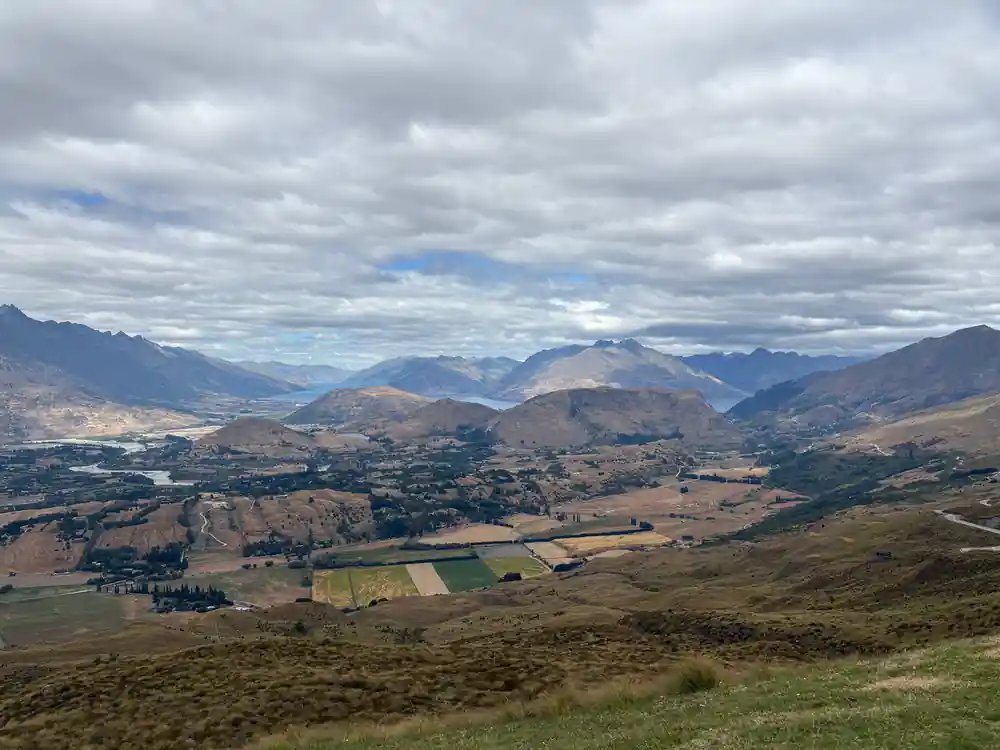
Queenstown sits in a basin ringed by mountains on Lake Wakatipu, with the Remarkables on the far side, and Coronet Peak is the ski field reached by a switchback road up from that valley. None of that scenery asks anything of your body; the run at launch is the only part that does, and it's over in a few strides.
Confirm Your Weight and Book Your Coronet Peak Flight
from US$217Reserve now & pay later